Blog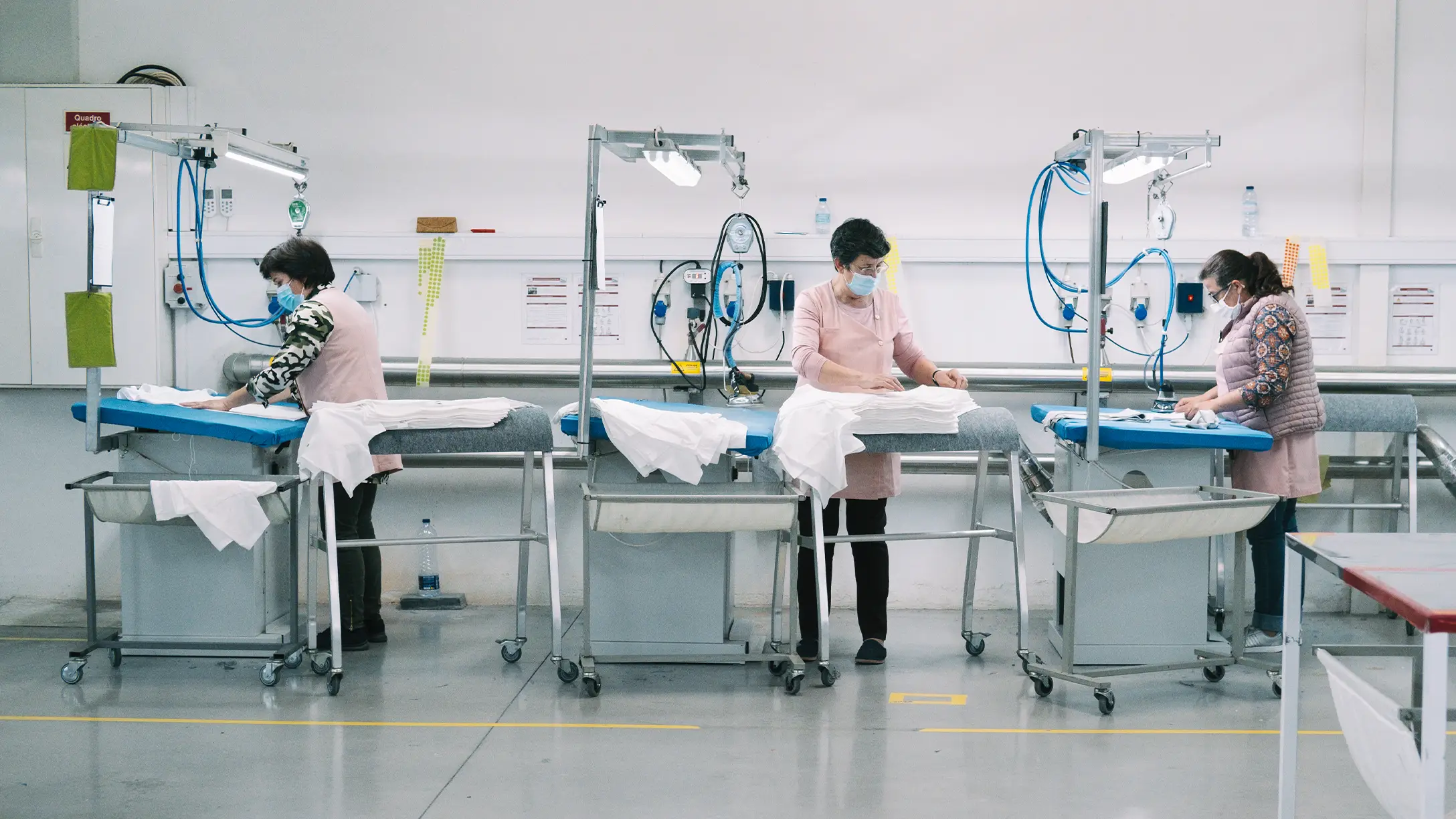
28 June 2026
Three questions to ask your merch supplier.
Everyone advertises "short transport routes". Follow a t-shirt from fibre to finished garment — plus three questions that tell you more than any label.
"Short transport routes" shows up on almost every merch site these days. It sounds good. But a route doesn't tell you much until you actually follow it.
So let's follow one — from cotton fibre to finished garment — and end with the three questions that tell you more about where a product comes from than any label does.
A t-shirt isn't made in one place.
A plain t-shirt has a longer story than it looks. Follow one from the start.
It begins as cotton fibre, which goes to a spinning mill — there it's cleaned, combed, drawn out and spun into yarn. The yarn moves to a knitting mill, where it's knitted into jersey fabric on circular machines. At this point it's still raw and off-white: "greige" fabric, no colour yet.
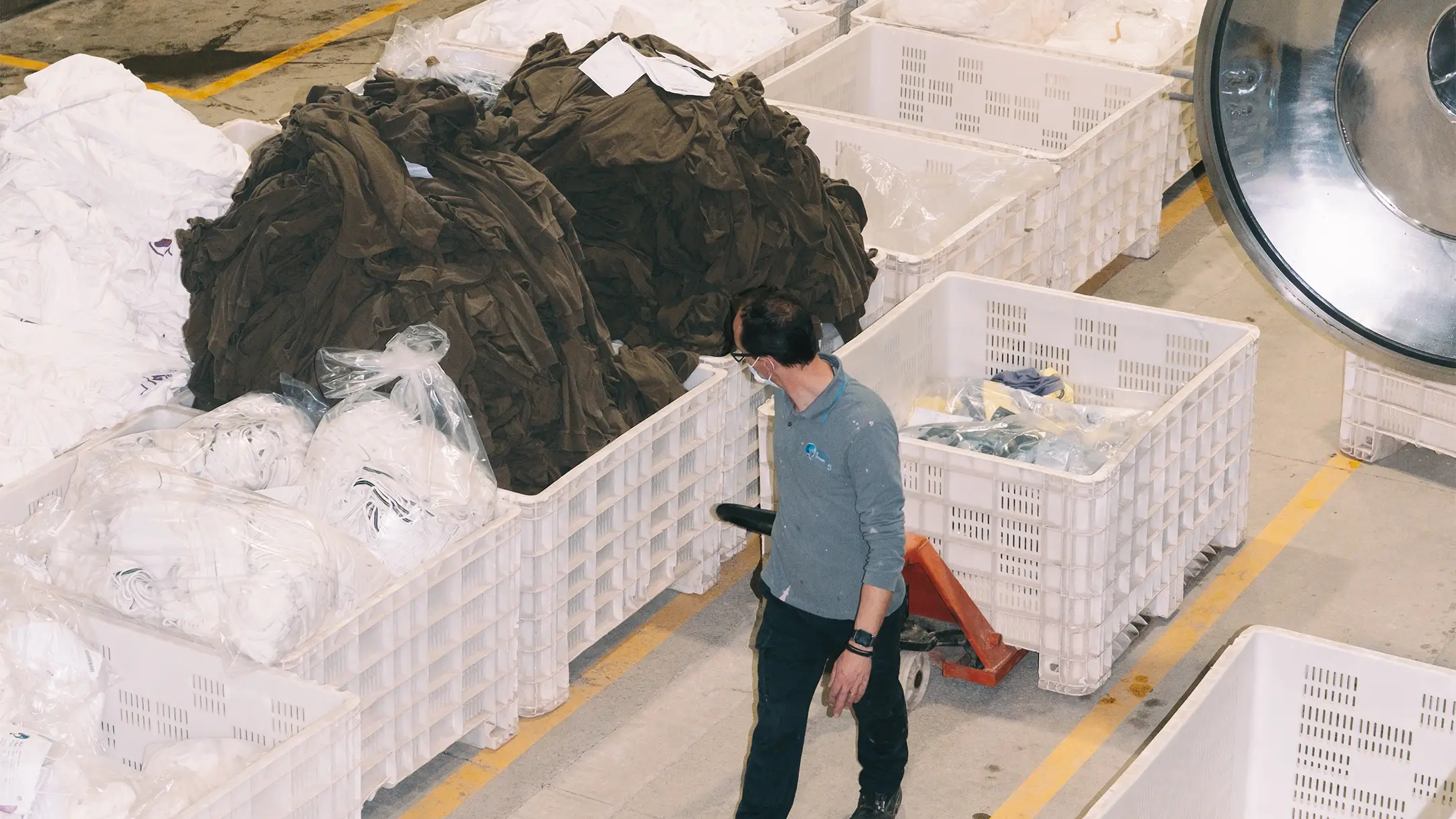
Then comes the dye house — the most chemistry-heavy step of all. The fabric is first cleaned and prepped, so the natural waxes and oils are washed out. Then it's dyed in large machines, one batch at a time, over several hours. This is also where the fabric is pre-shrunk and softened, so the finished shirt keeps its colour and shape after you wash it.
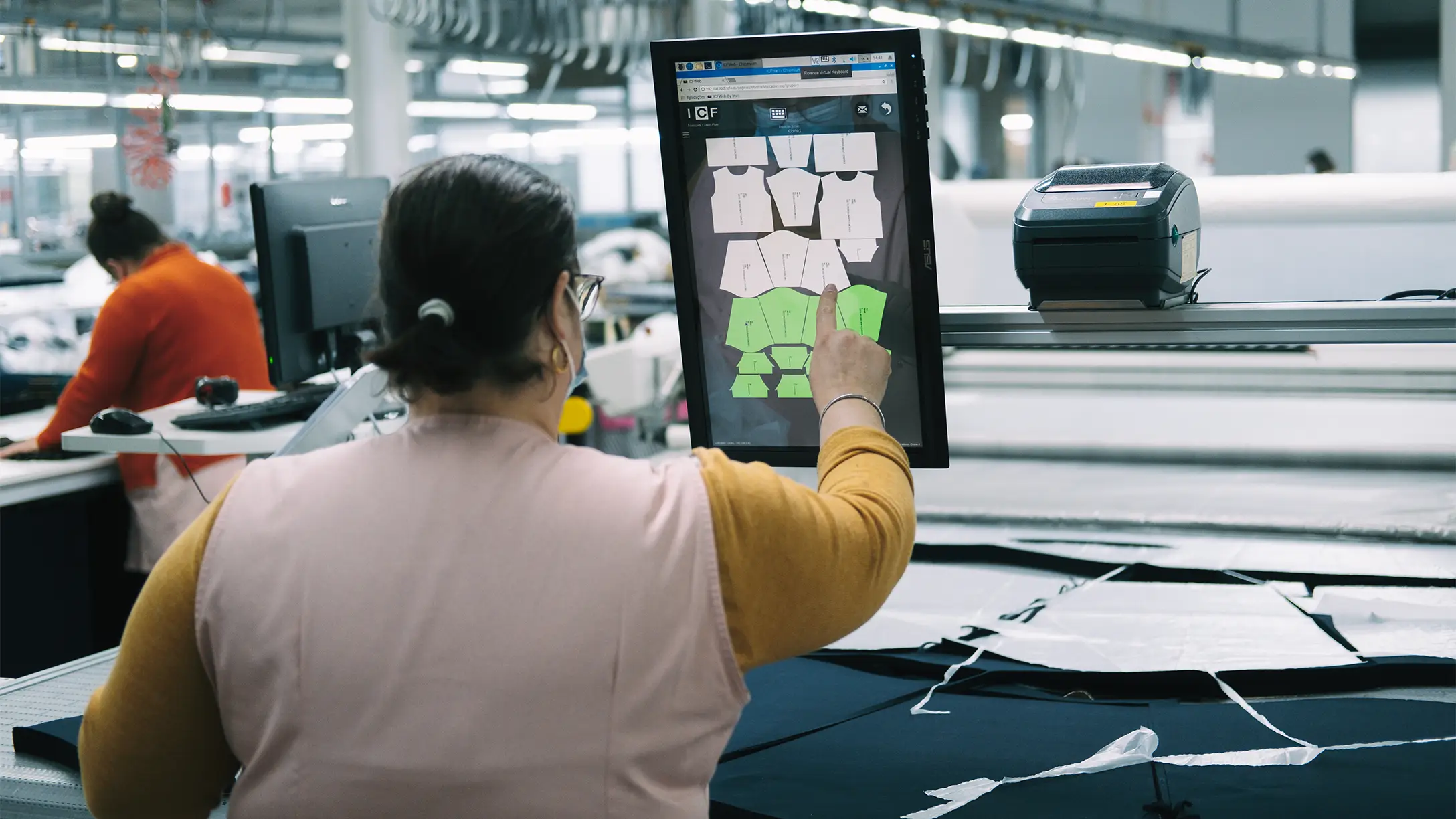
Only now does it become a garment. The fabric is laid out and cut into pattern pieces, then sewn together — shoulders, sides, sleeves, collar. If there's a logo, it's printed or embroidered at this stage. Last come pressing, the quality check, folding and packing.
The spinning mill, the knitting mill, the dye house and the cut-and-sew workshop are usually separate businesses — sometimes in different towns. Turning fibre into fabric and turning fabric into a garment are two different industries. So before a single shirt is boxed up to leave, it has already moved between several specialists.
When people say "short transport route," they usually mean this stretch — the making. Ours stays in a tight cluster of workshops in northern Portugal, where these steps sit close to each other. But that's still only part of the map.
The longest leg is usually the quietest one.
Here's the part most stories skip: "Made in Europe" often starts at the knitting or sewing stage. The cotton itself — the fibre and the yarn — usually travelled before the European chapter began.
That isn't a scandal. It's just how textile supply chains work, and hardly anyone's chain is clean the whole way. What matters is whether a maker knows where their chain actually begins — and says so, instead of letting a label imply the whole story.
We don't pretend to trace every fibre back to a field. But we know where our production sits, who works there, and we can name the point where the chain really starts for us.
And then it still has to reach Switzerland.
This is the leg almost everyone forgets: once it's made, the whole batch still has to get from Portugal to Switzerland — close to 2,000 kilometres by road.
You can do that in two ways. Send it by air and it's here almost the next day — fast, and with far higher emissions. Or move it over land, and if you want to keep the impact low, it takes more like one to two weeks.
We'd rather wait the one to two weeks. A "short" route was never about speed — it's about choosing the version of the journey you can stand behind, even when it's slower.
The three questions.
You don't have to take anyone's word for this — ours included. If you want to understand where a piece of merch really comes from, these three questions do most of the work:
- where is it knitted, dyed and sewn? (a place, not just a country)
- where does the cotton come from?
- how does it actually get to you?
None of them are trick questions. They just move the conversation from the label to the real journey — and that's usually where you learn something.
Thinking about where your own merch comes from?
We're happy to walk you through how your products would actually be made — step by step, and honestly about what we can and can't trace.
AG
Alina
blaenk studio