Blog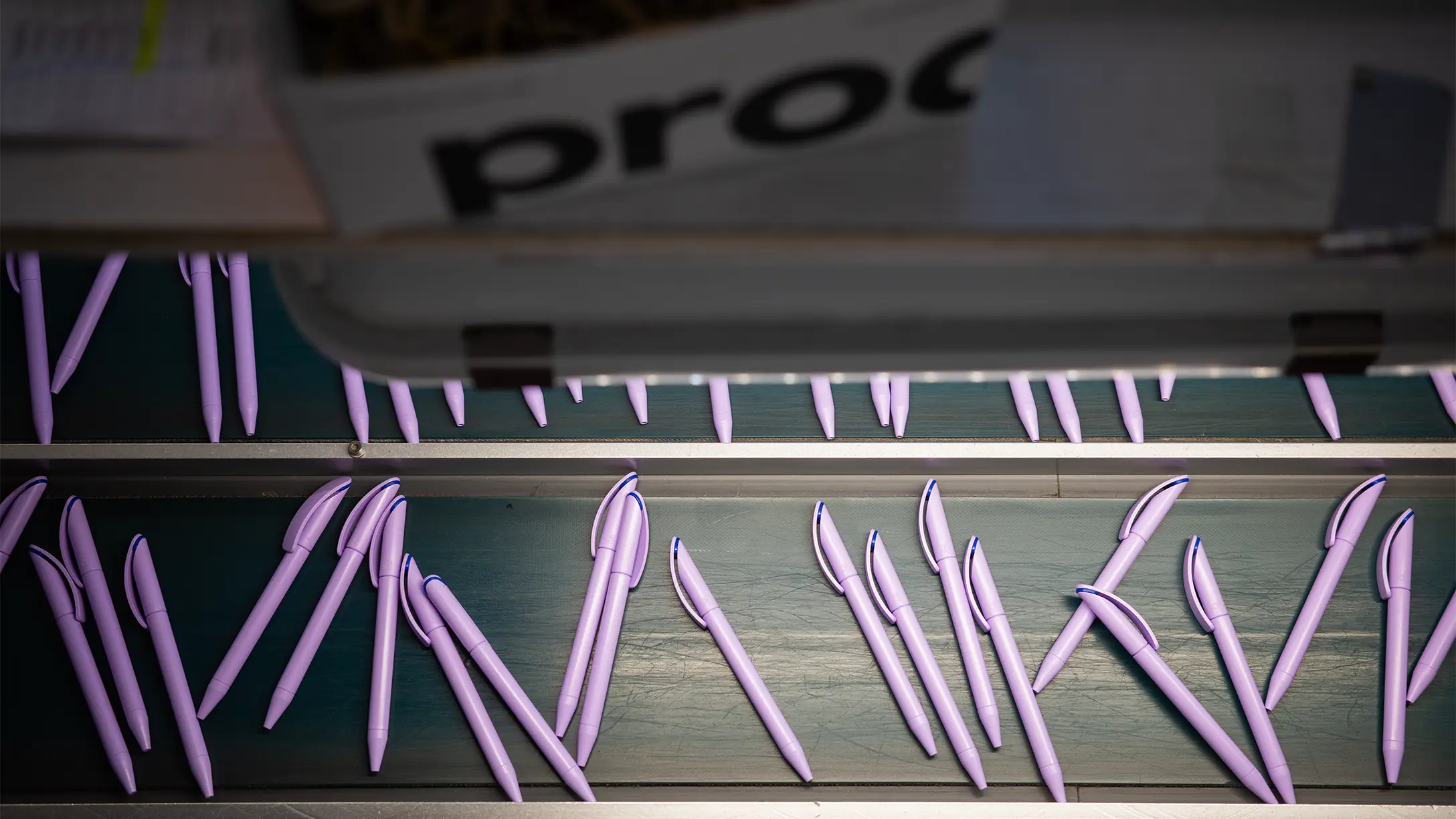
18 August 2026
Everyone owns a pen. Almost nobody knows how one is made.
We spent a day inside prodir's production in Ticino. We went to look at pens. We came back thinking differently about products.
Most people rarely give a pen a second thought. You pick one up in a meeting, write three words, put it down again — and that's that.
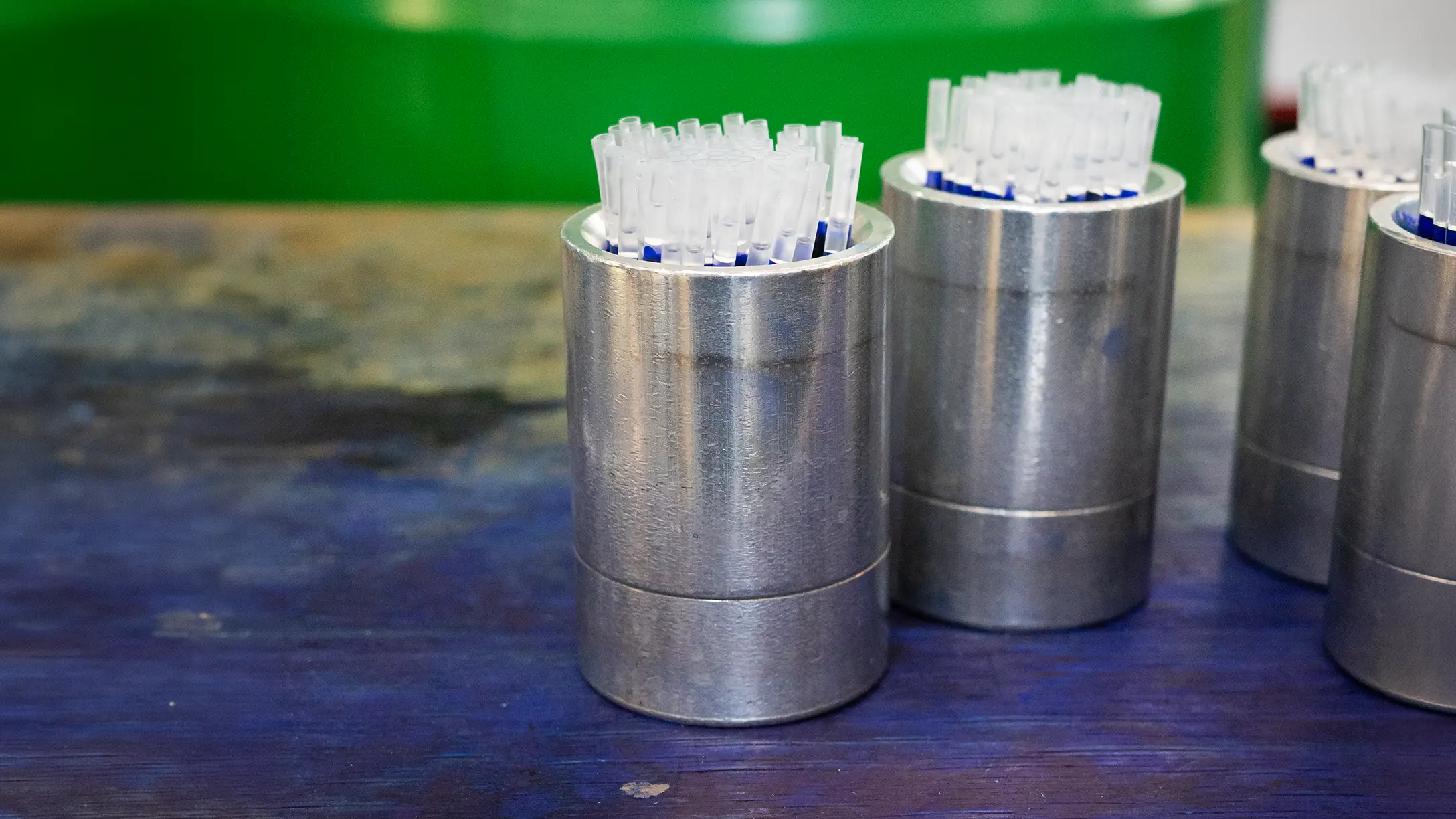
Recently, prodir invited us to their production site in Ticino, where the pens we offer are made. They took the time to walk us through each step — injection moulding, printing, assembly and quality control. Afterwards we sat down together for lunch and kept talking about manufacturing, materials and product development.
We arrived expecting to learn more about pens. We left wondering how much engineering it takes to make a product feel this ordinary.
The simpler a product looks, the more there usually is behind it.
That was probably our biggest takeaway. A pen looks simple. The production behind it isn't.
What surprised us most about the machines wasn't their size — it was their complexity. How precisely they have to be set. How small the tolerances are. And how many separate steps it takes for everything to line up in the end — the mechanism, the fit of the parts, the print on the barrel.
It's the same pattern we know from socks: what looks plain has to be built more precisely, not less.
Good products are built long before the branding.
On a finished product, the logo is the first thing you notice. Inside a factory you realise how late it actually enters the process. Long before anything is printed, there are decisions about tooling, materials, tolerances, production processes and quality control — and those decisions determine how a product feels, how long it lasts and whether people keep using it years later.
Some of those decisions are made once and shape every model afterwards. Since 2013 prodir has only offered refillable ballpoint pens, and produces the refills in-house. That settles something from the start: the pen isn't built for one refill, it's built to keep being used.
Branding doesn't create a good product. It finishes one.
Quality isn't something you check at the end.
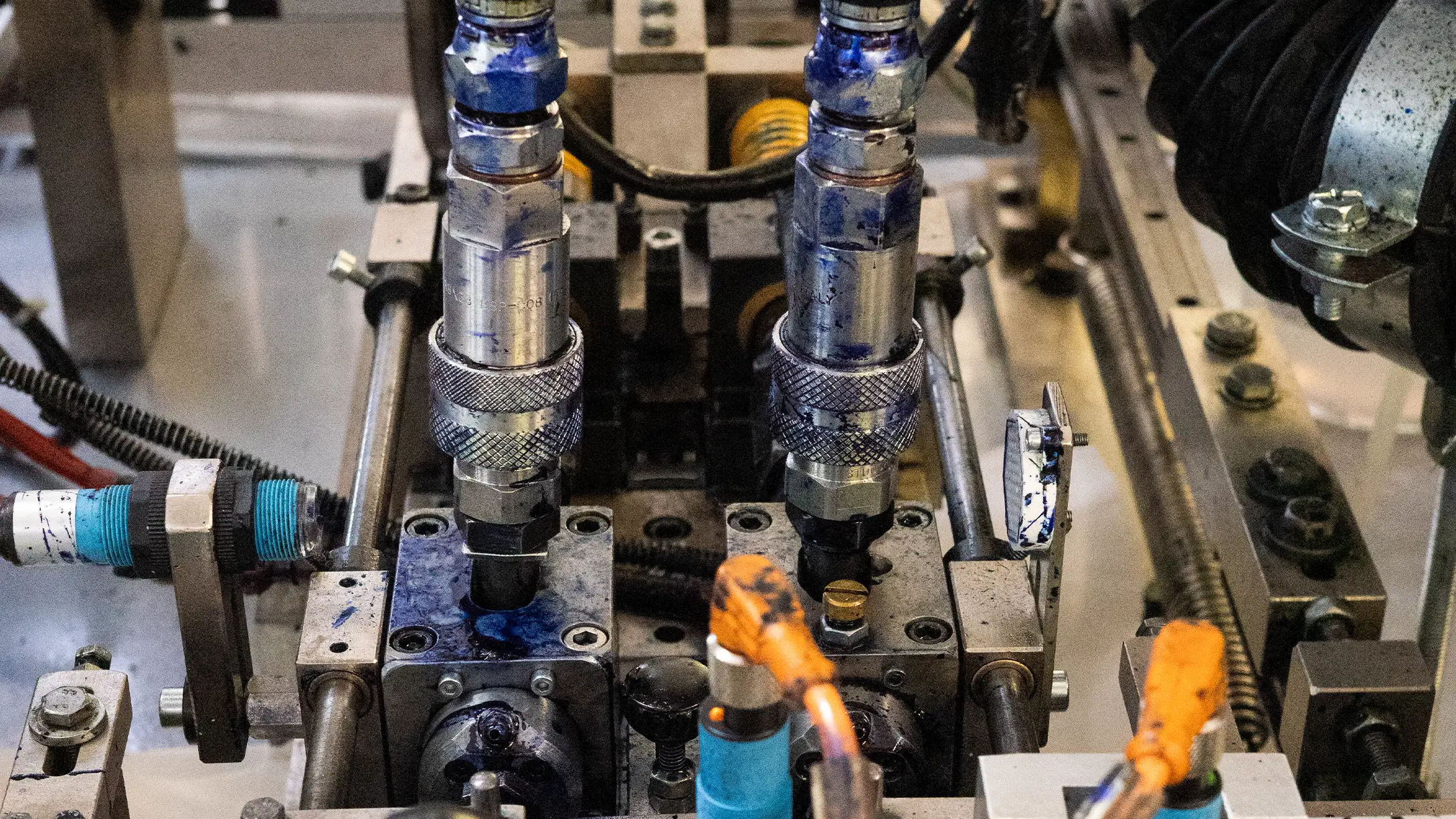
What we'd underestimated was how sensitive the whole process is. The machines aren't simply set up and left running — small adjustments matter, and individual components go through quality control before they become part of the finished pen.
You don't see any of that when you pick up the final product. You just notice that it works.
You'd assume quality control happens at the end of a production line. In reality it's part of the whole process — which is exactly why it's one of the things worth asking a producer about before you order.
The engineering is the part nobody sees.
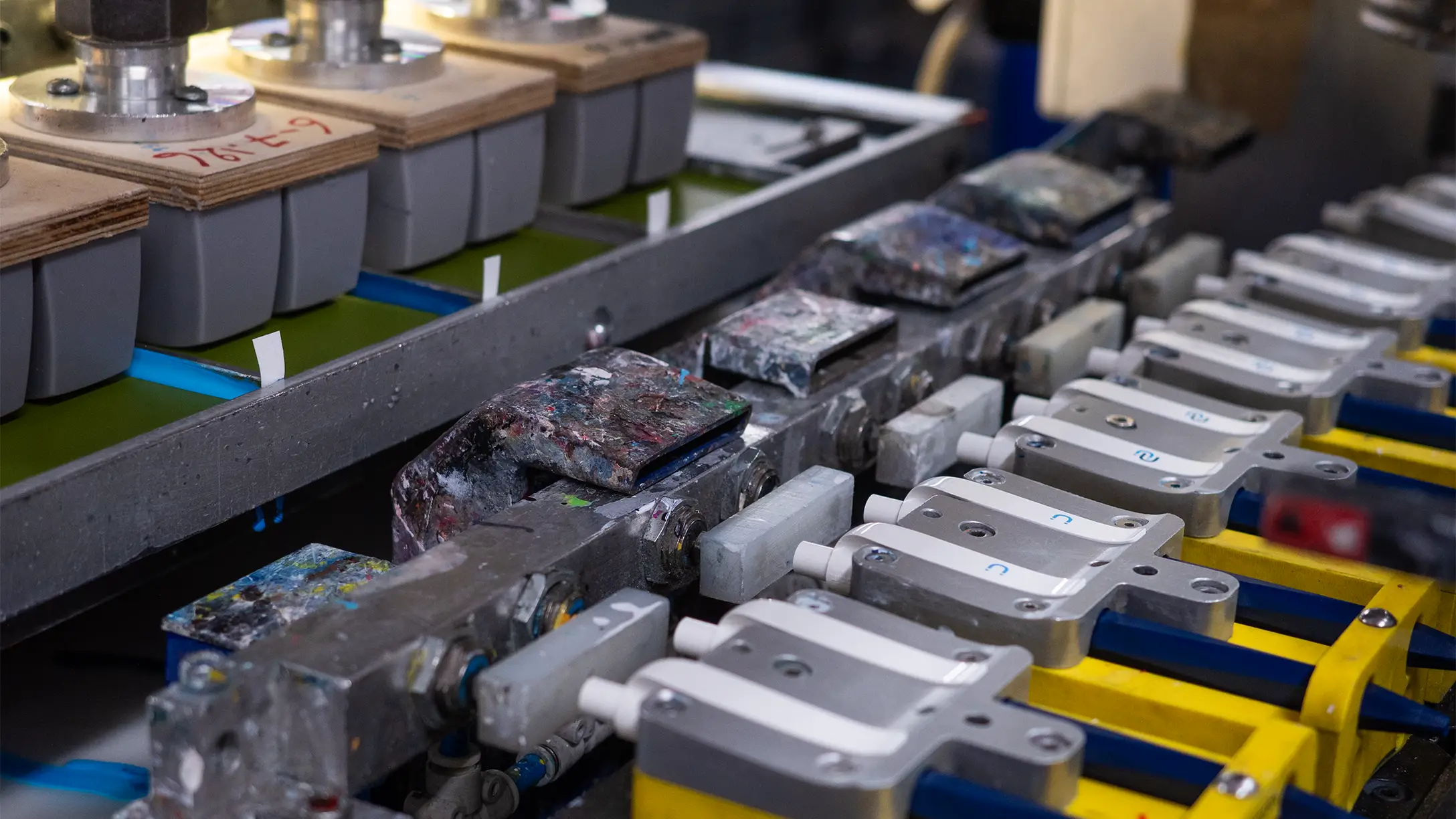
On a finished pen everything looks obvious: the clip, the mechanism, the refill, the body. It's only in the factory that you see how much precision it takes for those parts to come together the same way thousands of times over. That's what stayed with us from the day.
Factory visits keep reminding us of the same thing: good products rarely come from one big idea. They come from hundreds of small decisions that barely register on their own — but together they're the difference.
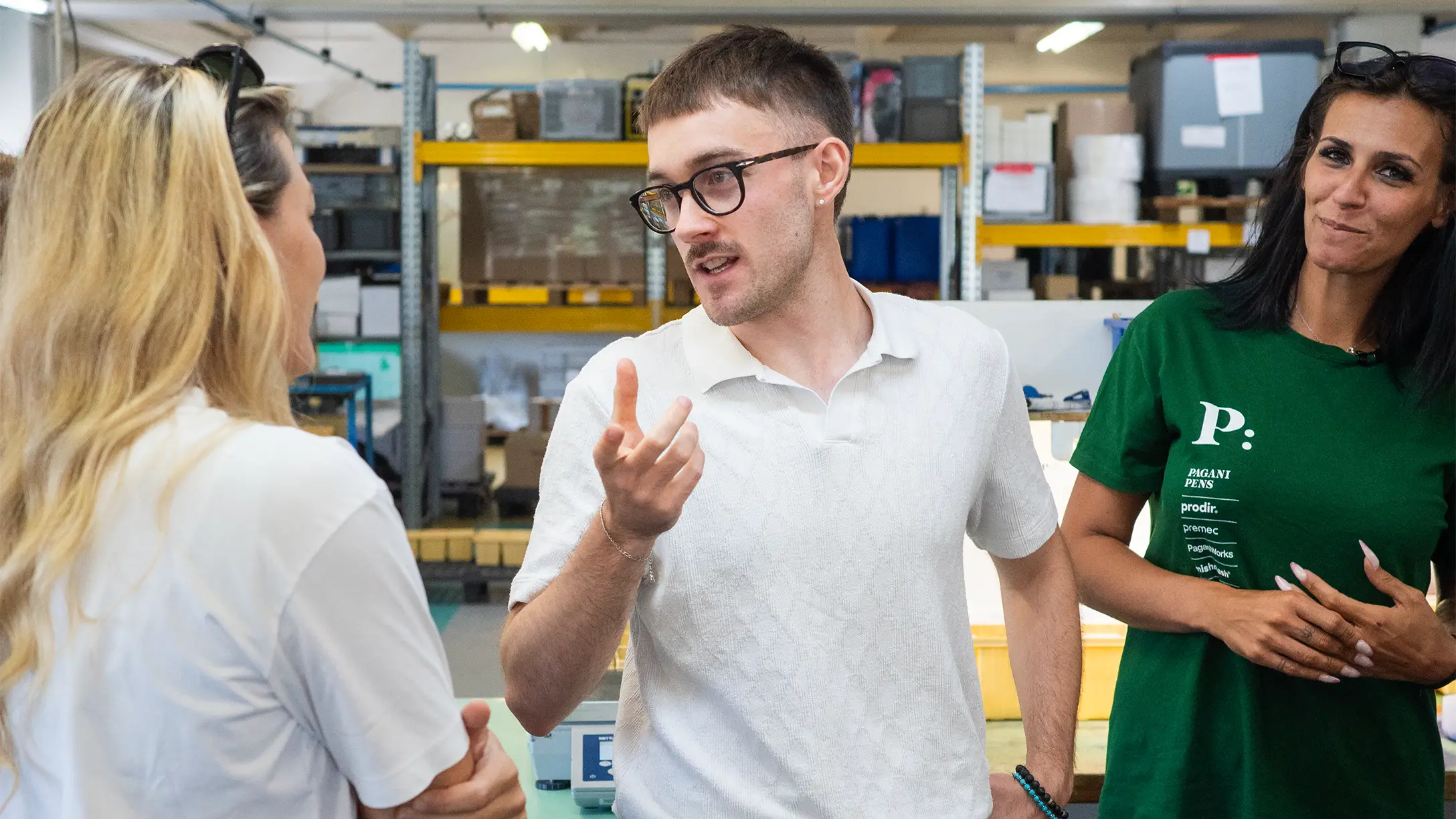
We'll never look at a pen quite the same way again.
If you want to see where all of this ends up, the prodir pen we made for blaenk is in our shop.
prodir pens for your own brand?
We work with a selected range of prodir models — Swiss made, refillable and customisable.
AG
Alina
blaenk studio