Blog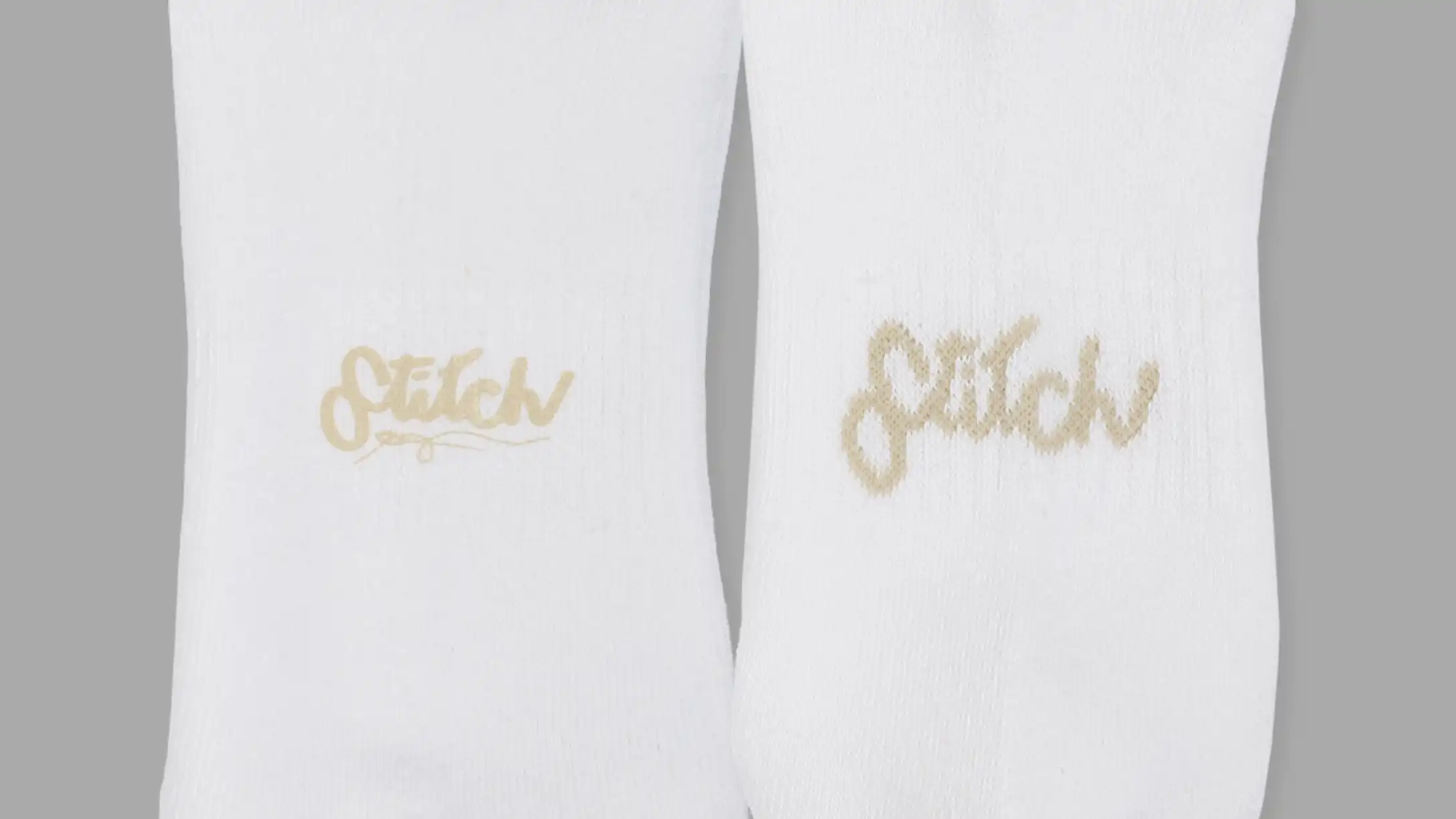
28 May 2026
Two methods. One sock. Different rules.
Not every sock logo is made the same way — footprint applications vs. knitted logos, and why they behave differently once part of production.
The logos on these socks look similar — they're not.
One is applied afterwards as a footprint on the sole. The other is knitted directly into the sock itself. And that difference changes everything: detail, durability, colour possibilities — even how the logo gets designed in the first place.
A sock logo follows different rules.
As we described in our first sock production post, sock designs behave more like pixels than print files. Every area is built stitch by stitch — that alone changes how logos work. And there isn't just one way to put a logo onto a sock.
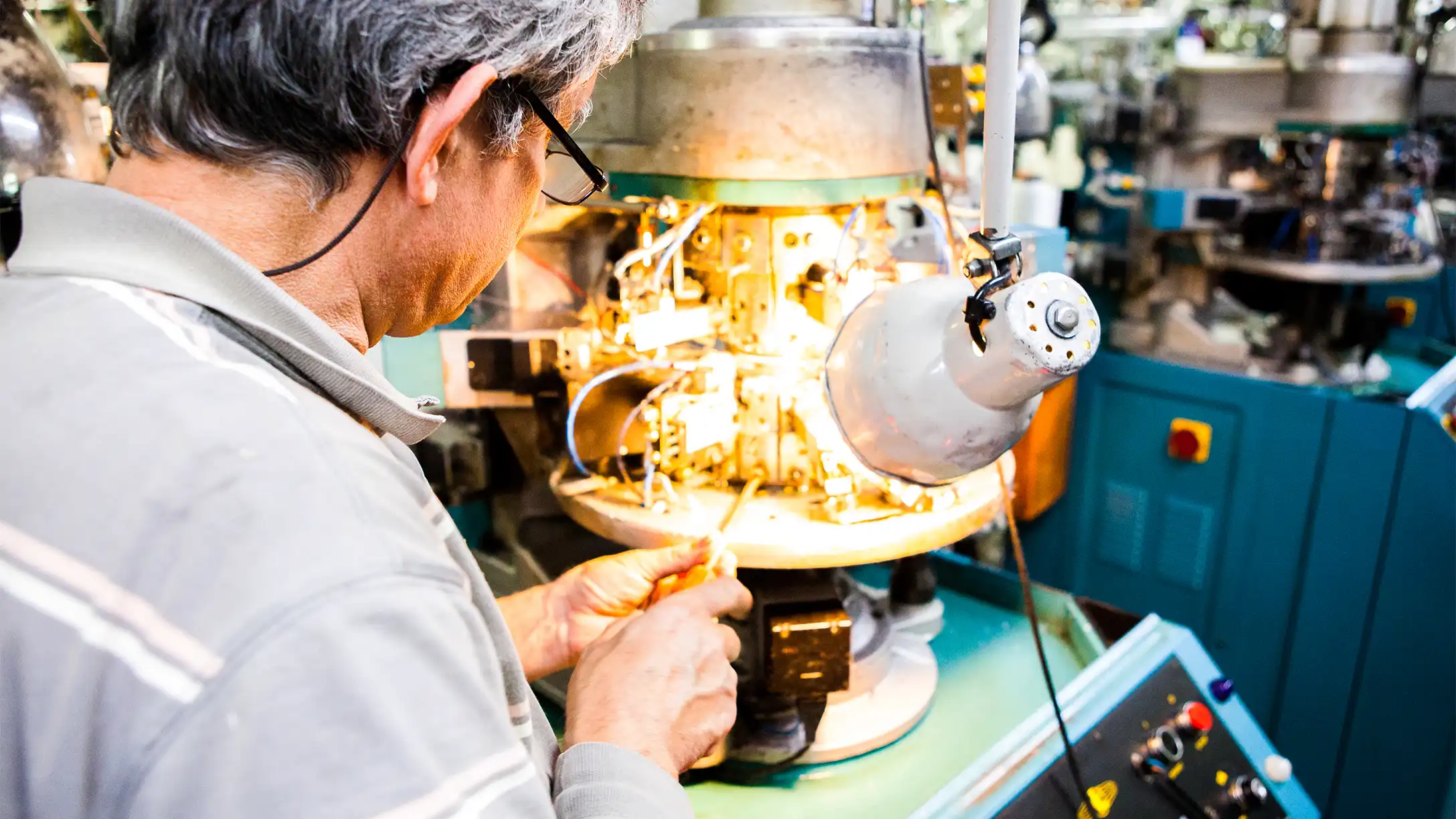
Footprints allow more detail.
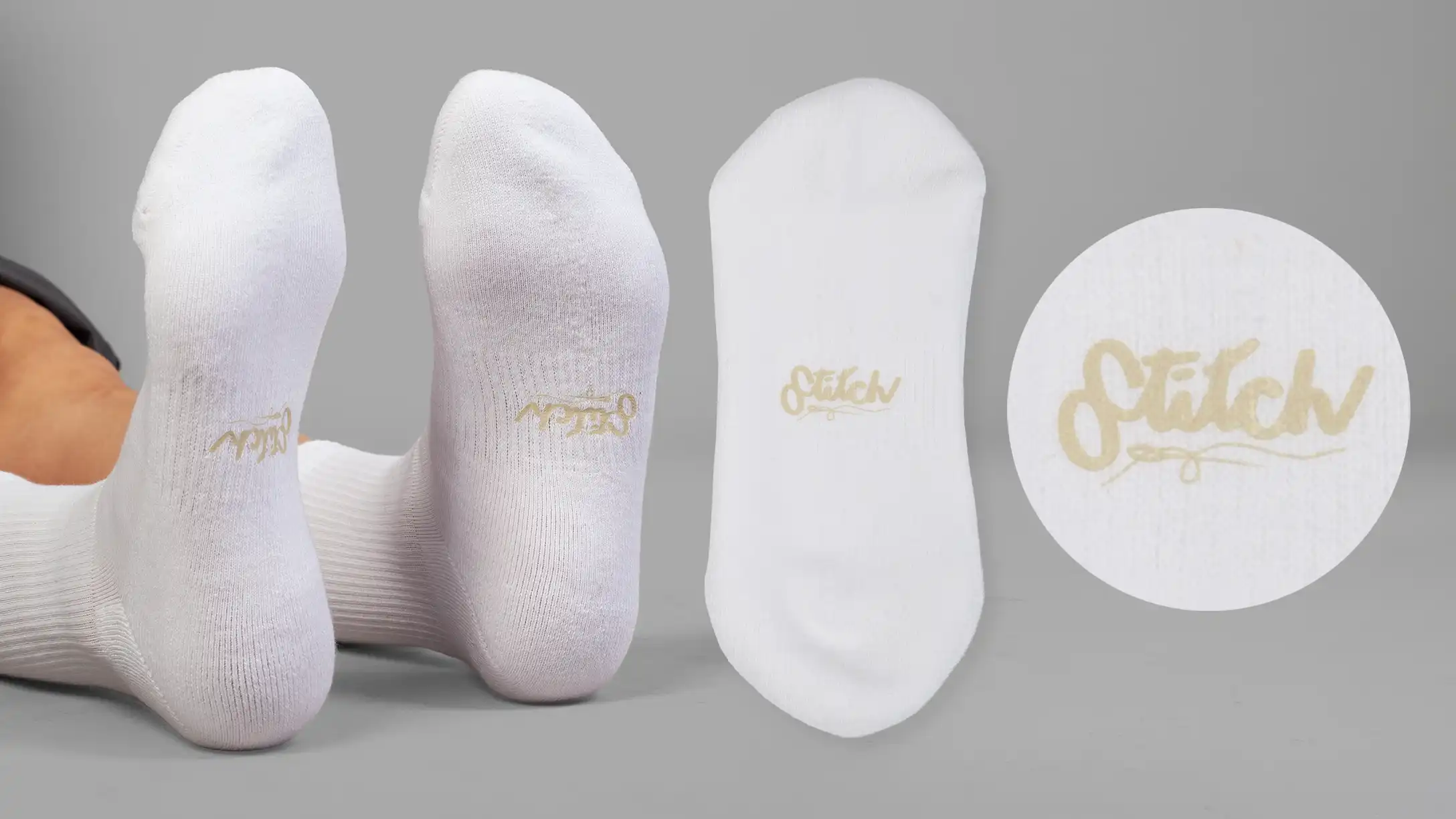
The first version we tested for this project uses a footprint application on the sole. Here, the sock gets produced first. Afterwards, the logo is applied separately using a custom mould created specifically for that design.
Because the logo is printed rather than knitted, much finer details become possible. Thin lines, multiple colours and more complex artwork reproduce much more accurately — which is why footprint applications are often the better solution for highly detailed logos.
But unlike a knitted logo, a footprint sits on top of the sock. Over many washes, it wears down.
Knitted logos become part of the sock itself.
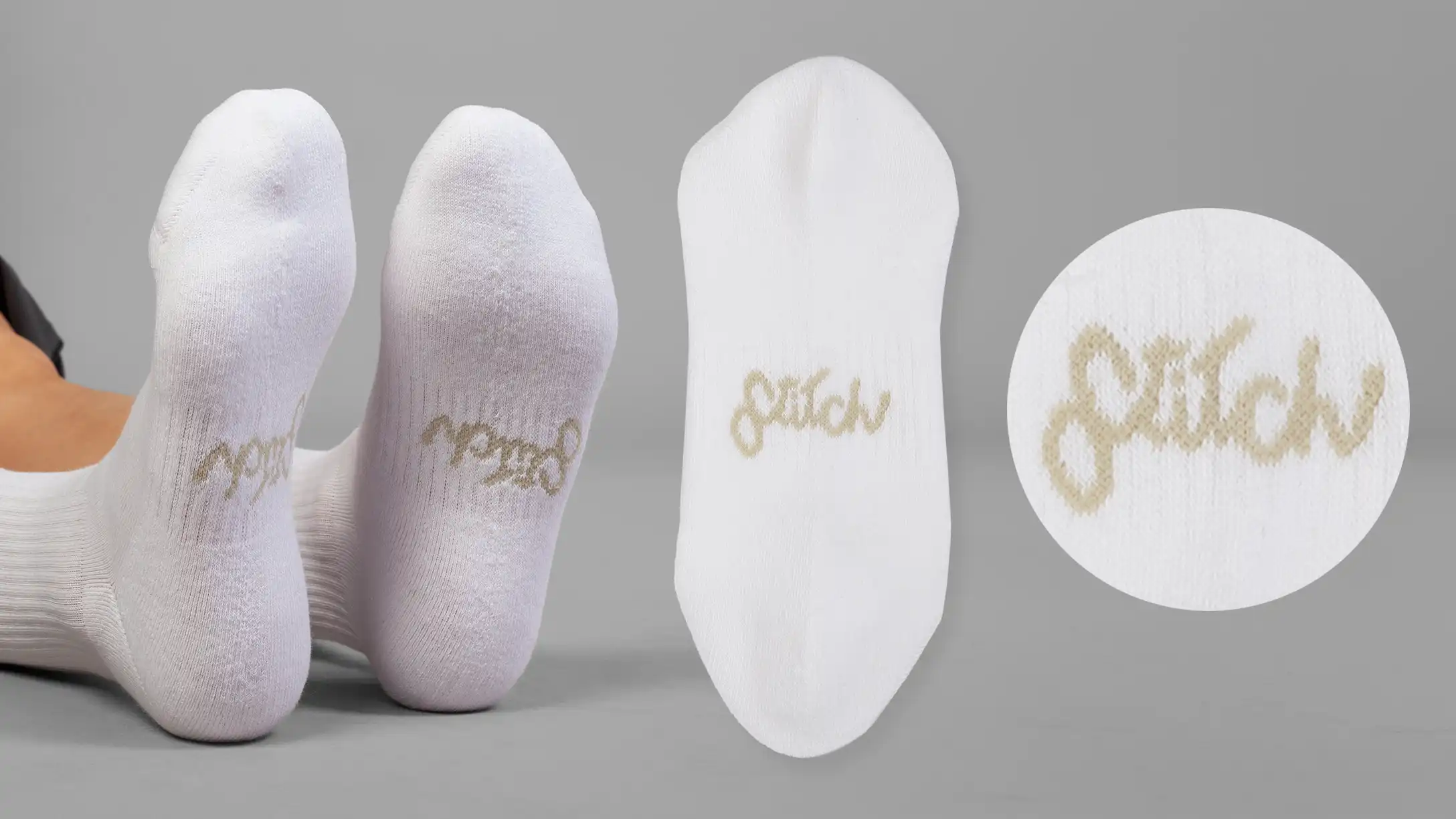
The second version we tested uses a knitted logo — integrated directly into the sock during production. It isn't applied afterwards; it's built into the structure of the sock itself.
The advantage is durability: because the logo is part of the fabric, it survives washes most prints wouldn't.
But knitted logos also come with technical limits. Very thin lines, tiny typography or highly detailed shapes become difficult because the design still has to follow the logic of knitted stitches. The logo needs enough space and enough visual weight to stay readable — which is why knitted logos work best once they are slightly simplified. Not because simpler looks better — because simpler knits better.
Every sock is a balance of priorities.
Neither method is universally better — they simply solve different problems. Do you want maximum durability? More visual detail? Very fine typography? Multiple colours? Most production methods strengthen one aspect while limiting another.
That's why we test things physically instead of deciding everything on screen. The best version of a sock usually only shows up once the sock exists in real life.
Thinking about custom socks?
We advise you on materials, logo methods and production constraints — and help adapt your design so it works as a sock, not just on screen.
AG
Alina
blaenk studio